

Maasai beadwork is a timeless art form known for its vivid colors, intricate patterns, and cultural significance. Whether you’re a collector, traveler, or simply an admirer, it’s essential to know how to distinguish genuine Maasai beadwork from imitations. In this guide, we’ll show you how to spot authentic Maasai jewelry and avoid counterfeit products, ensuring you invest in a piece that honors the rich traditions of the Maasai people.
1. Craftsmanship: The Heart of Authentic Maasai Beadwork
Authentic Maasai beadwork is hand-crafted by skilled artisans who have inherited their craft through generations. The process involves hours of painstaking work, from selecting the beads to threading them into intricate designs.
To identify authentic Maasai beadwork:
- Check for Handcrafted Quality: Authentic Maasai beadwork is made with precision by skilled artisans.
- Look for Uniformity in Bead Size: While beads are consistent, subtle variations in size or shape highlight the personal touch of the artisan.
2. Cultural Symbolism in the Design
Maasai beadwork is more than just decoration—it’s a form of storytelling. Each bead and color used in Maasai jewelry holds deep cultural significance, representing important aspects of Maasai life, from strength to fertility.
Look for:
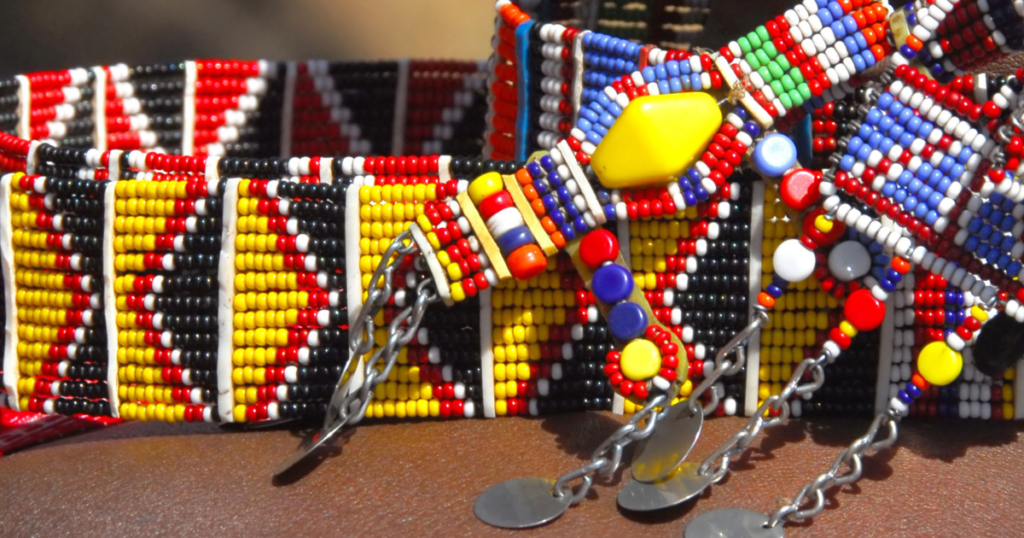
- Traditional Patterns: Authentic Maasai jewelry features specific geometric designs passed down through generations. These patterns often have symbolic meanings, such as circles representing unity or triangles symbolizing strength.
- Meaningful Color Schemes: Each color carries a message. Red symbolizes courage, blue represents peace, and green is linked to fertility. Imitations may lack these intentional color choices.
3. Authentic Materials: Glass Beads, Metal, and More
True Maasai beadwork uses natural, high-quality materials such as glass beads, metals, and sometimes bone or wood. The beads are typically small, creating intricate patterns that stand out as handcrafted art.
When inspecting a piece:
- Glass Beads: Authentic Maasai jewelry uses durable glass beads, known for their vibrant colors and longevity. If the beads are plastic or look synthetic, the piece may not be authentic.
- Quality of Beads: The beads are consistent in size and shape, reflecting the artisan’s attention to detail. These beads are typically glass and have a durable, polished finish.
4. Know the Artisan or Seller
The best way to ensure you’re buying authentic Maasai beadwork is to purchase directly from Maasai artisans or reputable sellers who collaborate with the community. Many Maasai beadwork sellers will be transparent about their artisans and their work.
To verify authenticity:
- Ask About the Origin: Reputable sellers will be able to confirm that the jewelry was made by Maasai artisans in Kenya or Tanzania.
- Look for Artisan Details: Many sellers working directly with Maasai communities will share stories of the artisans or their villages, helping you connect with the culture behind the craft.
5. Certificates and Documentation
Some organizations and sellers offer certificates of authenticity, ensuring that the piece was made by a Maasai artisan and follows traditional methods. These certifications help ensure that the jewelry is genuine.
Check for:
- Fair Trade Certifications: Look for certificates from recognized fair trade organizations that support Maasai artisans.
- Documentation of Origin: Many ethical sellers will include documentation that proves the piece was made by Maasai artisans in their home country.
6. Pricing: Fair Value for Authentic Maasai Beadwork
Authentic Maasai beadwork is handcrafted, and as a result, it can be priced higher than mass-produced imitation items. While prices can vary based on size and design complexity, extremely low prices may indicate a counterfeit product.
Consider:
- Reasonable Pricing: If a piece is priced too cheaply for its intricate design, it may not be authentic.
- Exclusivity and Uniqueness: Authentic Maasai jewelry is often one-of-a-kind, with slight differences between pieces. If you find identical items, they might be mass-produced.
7. The “Feel” of Authentic Maasai Jewelry
Authentic Maasai beadwork has a unique texture and weight. When you hold a piece, it should feel substantial, with beads that are securely threaded together. Counterfeit pieces might feel flimsy or overly light.
- Weight and Texture: Authentic pieces have a solid feel and may feel slightly rough or textured due to the materials used.
- Look for Subtle Imperfections: Handmade jewelry often has slight variations, which is part of its charm. Mass-produced imitations, however, will appear flawless.
8. Support Ethical Sellers
Buying from ethical sellers ensures that your purchase supports Maasai communities and artisans. Authentic Maasai beadwork is often sold through fair trade platforms, local markets, or directly from artisans, which ensures that the money goes back to the people who created it.
Look for:
- Transparent Sellers: Ethical sellers will be upfront about their sourcing practices and the artisans they work with.
- Sustainability and Community Support: Many sellers who offer authentic Maasai beadwork are committed to supporting Maasai communities through sustainable practices and fair wages.
Conclusion
Identifying authentic Maasai beadwork is all about knowing what to look for. By understanding the craftsmanship, cultural symbolism, materials, and pricing, you can make informed decisions and support the Maasai artisans who carry on this beautiful tradition. When you buy authentic Maasai jewelry, you’re not just acquiring a unique piece of art—you’re honoring the heritage and culture of the Maasai people.